
Arrest Warrants in Antrim County
In Antrim County, an arrest warrant is the order that lets police take someone into custody on a charge. It never appears out of thin air. A police agency or the prosecutor files a complaint first, and a judge reviews the probable cause before signing anything. Which court signs depends on where the case sits. Misdemeanor, traffic, and ordinance charges stay with the 86th District Court. A felony also opens there, at the preliminary examination stage. Only if the case is bound over does it move to the 13th Circuit Court. The Sheriff then serves the order. No county page publishes a warrant list, so a case number and a phone call do the work.
Antrim County Arrest Warrant Probable Cause
An Antrim County arrest warrant rests on two papers. One is the complaint. It states the charge. The other is the probable cause showing, usually an officer's sworn affidavit laying out the supporting facts. Michigan requires that groundwork in MCL 764.1a, and MCR 6.102 spells out the procedure. A judge then weighs the material and picks between two paths. A summons directs the person to appear on their own. A warrant authorizes custody instead. That call turns on the affidavit's facts and the judge's reading of them, not on any fixed rule. The Antrim County Prosecuting Attorney page shows how county criminal prosecution and the charging route reach the court.
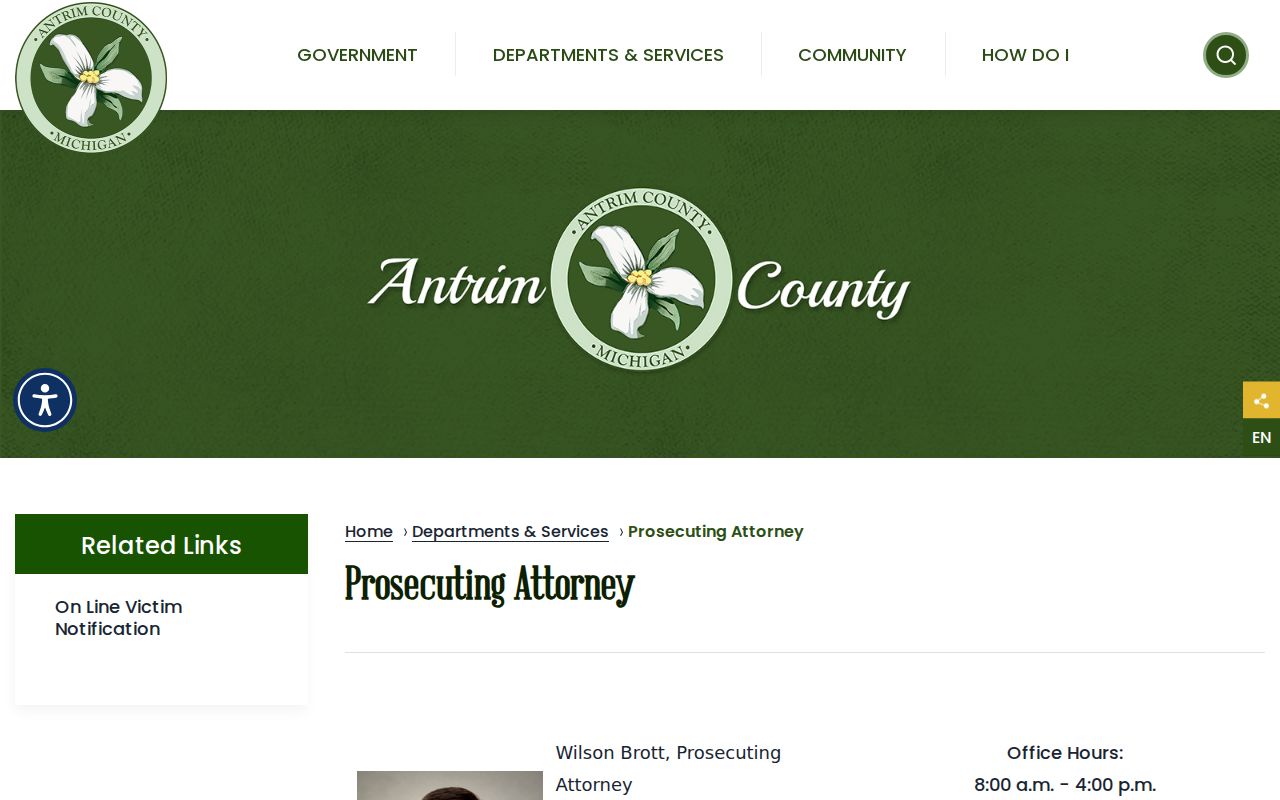
Charging choices shape the paperwork a judge reviews. In Antrim County, that makes the case number more useful than a name alone.
What an Antrim County Arrest Warrant Contains
An Antrim County warrant file holds more than a name and a charge. The fields here are the ones a reader can actually use. They are also the ones a court can discuss without releasing restricted material.
| Court and county | The issuing court and county. Check the location when a result spans courts. |
|---|---|
| Case number | Links the order to the complaint and the docket. |
| Person named | The subject of the order. Public identifiers beyond a name may be withheld. |
| Charge | The offense stated in the complaint. A charge is not an outcome. |
| Probable cause basis | The complaint and affidavit support. Investigative detail is often redacted. |
| Issue date | When the judge signed it, not the service date. |
| Bond and conditions | Set by the court, when the court released it publicly. |
| Service and return | Whether an agency served it and what it reported back. |
| Status | Active, served, recalled, satisfied, sealed, or nonpublic. |
Antrim County court forms also carry operational fields, like a police report number or a state identification number. Those do not help a public reader.
Antrim County Arrest Warrant Court Path
Felony cases in Antrim County pass through two courts, and a warrant can attach to either stage. The 86th District Court holds the preliminary examination. That hearing tests whether enough evidence exists for the case to continue. If the standard is met, the matter binds over to the 13th Circuit Court for trial, and the Antrim County Clerk takes over the file. The transfer matters to anyone running a warrant check. A felony order may first appear in district proceedings and later belong to a Circuit Court file. So ask which stage the case reached before requesting anything. The 86th District Court criminal division page lays out misdemeanor, traffic, preliminary examination, and bindover work in one place.
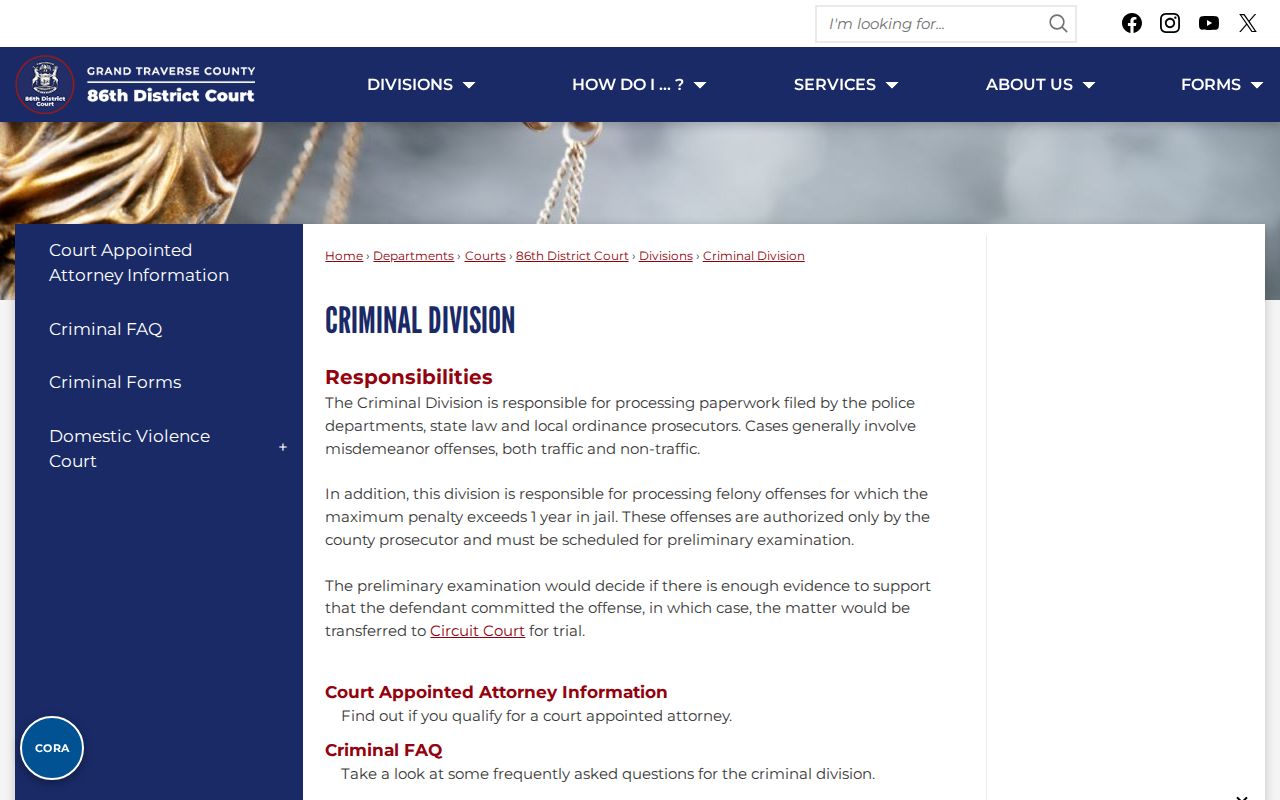
Read it before you call, so the Antrim County clerk can tell you which court now holds the record.
How Antrim County Arrest Warrants Are Served
The Antrim County Sheriff serves active warrants. The county's own description of road patrol work includes arresting people wanted on criminal warrants and serving legal process. Other law enforcement agencies can act on an order too. A restricted state network is what tells them the warrant exists. The Civil Process Unit runs a separate lane. It handles summonses, complaints, protection orders, and foreclosure notices, and its fee schedule has nothing to do with a criminal warrant. Call about a warrant, though, and you should not be routed into that fee table. Keep in mind that service does not decide the case. It simply delivers the person to the court process, where bond, an appearance, and the charge itself get addressed.
Antrim County Sheriff Warrant Service
For operational questions, the Sheriff's Office is the right call. Was a warrant served? How would a surrender work? The office answers those, though it is not a docket status desk, and it publishes no Antrim County warrant roster.
Antrim County Sheriff's Office
Service, execution, surrender, and agency records.
231-533-8627
86th District Court, Antrim
District case status, hearings, and bond questions.
231-533-6441
Antrim County Clerk
Circuit Court criminal file requests.
231-533-6353
The Antrim County Sheriff's page posts weekday office hours. Its vestibule stays open around the clock with a dispatch phone and a drop box. Nothing on the page promises warrant processing, so Antrim County callers should phone ahead.
Arrest Warrant vs Summons vs Bench Warrant
Three orders can reach a defendant in Antrim County, and each one works differently. An arrest warrant authorizes custody on a new charge. A summons asks for an appearance instead. A bench warrant punishes a missed step in a case already open.
| Point of comparison | Arrest warrant | Summons | Bench warrant |
|---|---|---|---|
| What starts it | A complaint and probable cause review | The same review, with an appearance ordered | A missed obligation in an open case |
| Who issues it | A judge | A judge | The judge on that case |
| Custody authority | Yes | No | Yes |
| Where the file lives | District, then Circuit after bindover | District, then Circuit after bindover | The court that already had the case |
| Typical first step | Arrest or a court appearance | A court appearance | A recall motion, hearing, or bond |
A summons is not a lighter charge. It is the same Antrim County charge, just delivered as a court date rather than an arrest.
A Warrant Is Not a Conviction
Antrim County docket lines can mislead if you read them as endings. Charges get dismissed. They get reduced. Orders get recalled before anything further happens. So treat an entry as a starting point, not a finish line. Online criminal displays add another wrinkle, since the state limits what appears there. The 86th District Court also paused extraction of criminal cases while it reconciled records. A blank screen is not a clean record. A partial screen is not the whole case either.
Key Point: A warrant means a court found enough to issue an order. Only the docket shows the outcome.
What to Do If There's a Warrant for You
Don't wait for a traffic stop to settle an Antrim County warrant. Call the court that holds the case. Then talk to an attorney before you act. Ask whether bond is set and whether an appearance is required. Ask what the recall process looks like. Follow the court's direction exactly, and keep the paperwork. If a warrant followed a missed date, the 86th District Court tells people to turn themselves in at the jail; call first to confirm where to report and what to bring. The Antrim Circuit Court courtroom location page lists the third floor courtroom, parking, and the accessible entrance.
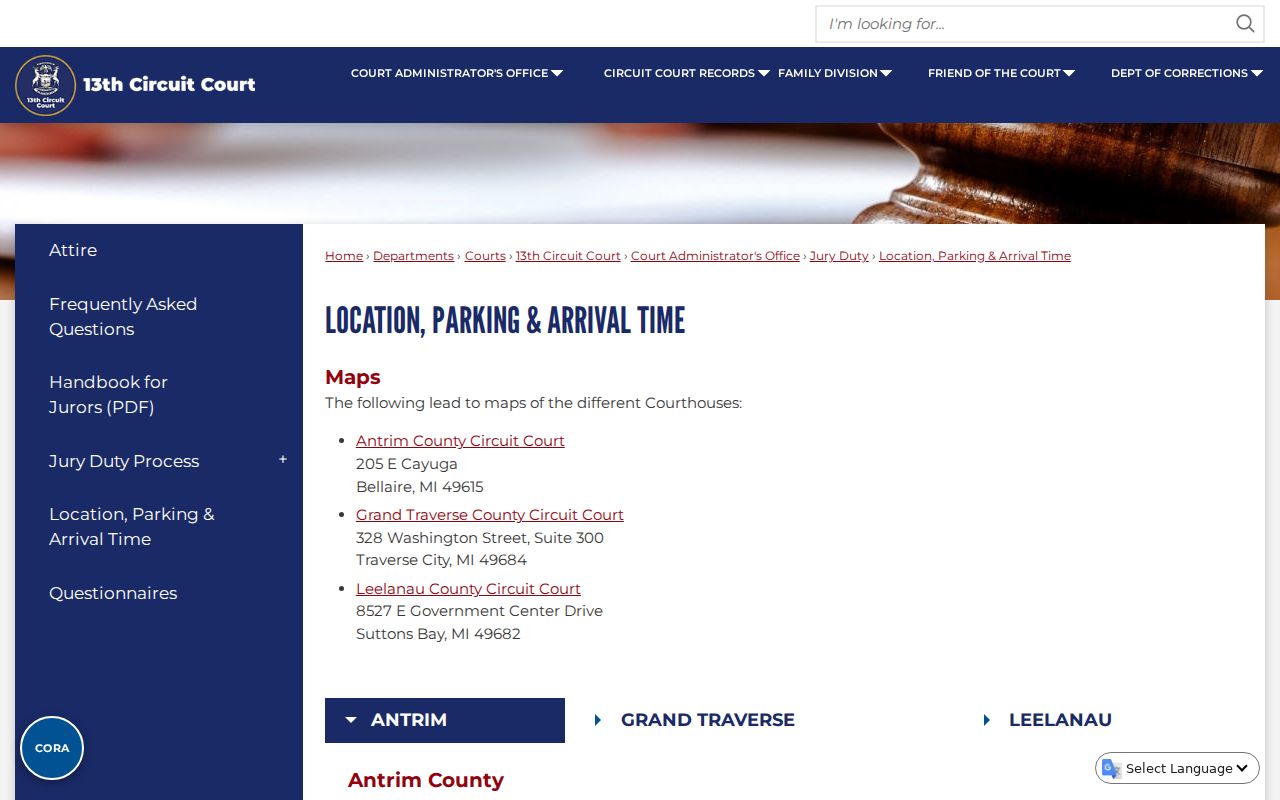
Knowing the building before you go removes one avoidable problem on a hard day.
Important: Do not ignore a court order while you decide, and do not arrange a surrender without legal advice. The sequence starts on the Antrim County warrant records home page.
Search Warrants Are a Different Order
A search warrant is a different order. It authorizes a search of a place, a vehicle, or electronic data. It is not an order for a person. And it never appears in a warrant lookup. The Michigan Constitution requires probable cause supported by oath or affirmation, plus a particular description of what will be searched. Antrim County has no public search for active search warrants. Neither does the rest of the state. So when a news story mentions a warrant, ask which kind it means. The Michigan Constitution, Article I, section 11 carries the probable cause and particularity language for searches.